
Heat management systems for barns, holding areas, and feeding zones to support productivity, health, and stable herd performance.
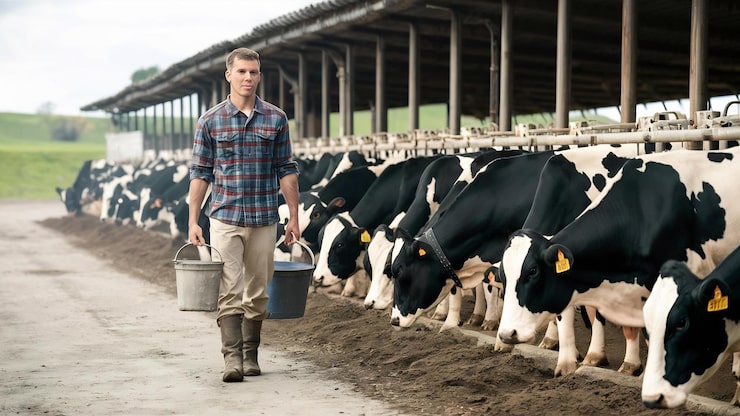
Heat stress is one of the most critical environmental challenges in dairy farming. When temperatures rise, cattle experience reduced feed intake, lower milk output, and increased metabolic strain. Over time, this affects fertility, immunity, and long-term herd performance.
Lactating cows are especially vulnerable because milk production already generates internal heat. When combined with high ambient temperatures, this creates a compounding effect that reduces productivity and increases health risks across the herd.
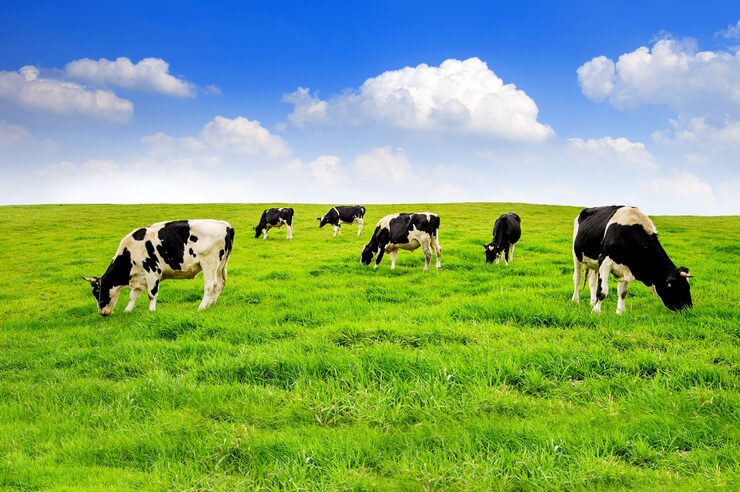
Even small increases in temperature can disrupt the biological balance required for efficient milk production. Cows under heat stress tend to eat less, drink irregularly, and redirect energy away from production toward cooling their bodies.
This results in inconsistent milk yields, reduced quality, and greater variation across production cycles. Without environmental control, farms often see seasonal drops in output that directly affect profitability and operational stability.
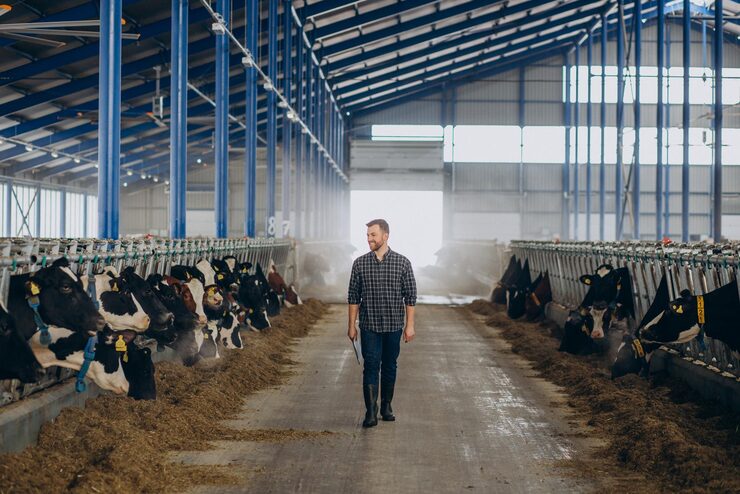
Many farms rely on shade structures, fans, or water soaking systems to manage heat. While these approaches offer partial relief, they often fail to regulate ambient air temperature effectively, especially in densely occupied areas like loafing pens and holding zones.
Soaking systems can also create excess moisture, leading to hygiene concerns and uneven cooling. Airflow-based solutions alone may not provide sufficient relief during peak heat conditions, leaving gaps in herd comfort.
When cows remain within their thermal comfort range, they maintain more consistent eating patterns, hydration levels, and metabolic activity. This directly improves milk production stability and reproductive performance. Better environmental control also reduces stress-related illness and lowers the likelihood of heat-induced production losses during seasonal temperature spikes.
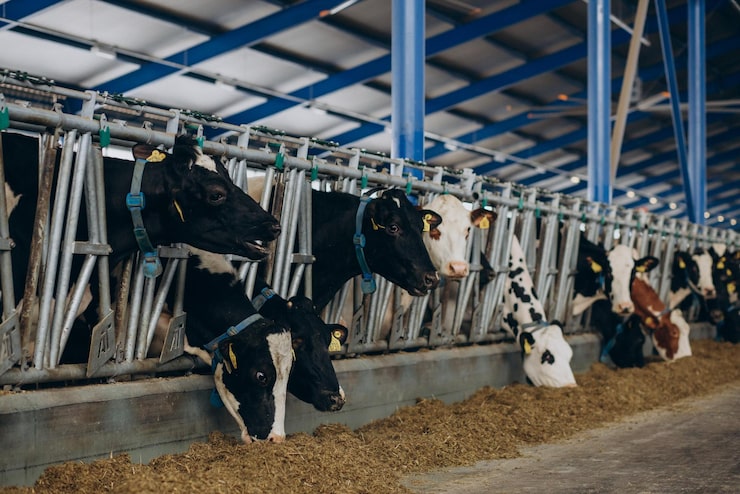
Advanced misting systems use high-pressure atomization to create ultra-fine droplets that evaporate quickly into the air. This process removes heat energy from the environment without wetting animals, bedding, or feeding areas.
Cooling can be applied in barns, feeding lanes, holding pens, and shaded resting zones. The system is designed to work with natural airflow, ensuring even distribution of cooling across high-density livestock areas.
Key benefits include:
• Reduced heat load across barns and holding areas
• Improved comfort during feeding and milking cycles
• More stable body temperature regulation in cattle
Work with our team to design a cooling solution tailored to your dairy facility. We help optimize barn layouts, airflow patterns, and livestock zones for maximum efficiency and herd comfort.